
By Ricardo Rascon, Director of Marketing at Tetakawi · Updated
Key Takeaway
Class A industrial space in Mexico is defined by building specifications, and the spec sheet is the easy part. In 2026, with 103 new parks under construction and electricity emerging as the sector’s binding constraint, the lease terms behind the space (escalation mechanics, contracted utilities, expansion rights) decide more of your five-year cost than the asking rent does. This primer covers the standard, the market, the commitments, and where move-in-ready capacity exists today.
In This Article
Every Class A brochure in Mexico lists the same numbers: clear height, dock ratio, yard depth. Those numbers describe the building. None of them appear in the clause that determines what your facility costs in year four, whether you can add a second line without a second address, or whether the park can deliver the electrical capacity your equipment schedule assumes. An executive evaluating an industrial park in Mexico is really evaluating two documents: a spec sheet that is standardized across the market, and a lease that is not.
This primer takes both seriously. It covers what the Class A standard includes, what the 2026 market looks like by region, the five commitments inside a lease that deserve CFO-level attention, and how a shelter-serviced campus changes the structure of the decision.
What Class A Means
Class A industrial space in Mexico refers to new or recently built facilities that meet the market’s highest current standard: clear heights of roughly 8 to 12 meters, insulated roofing systems, LED lighting at production intensities, loading docks proportioned to floor area, deep maneuvering yards for full-size trailers, and controlled park access with 24/7 security infrastructure. Buildings a generation older, with lower clear heights and thinner slabs, trade as Class B at a discount.
The classification matters because it standardizes the top of the market. When developers, brokers, and tenants say Class A, they are describing the same physical product in Tijuana, Monterrey, or Mazatlán. What the classification does not standardize is everything wrapped around the building: the currency and escalation structure of the lease, the utilities contracted to the site, the rights you hold over adjacent space, and the services included in the park. Two identical Class A buildings can carry very different five-year costs.
The 2026 Market
Mexico’s industrial park sector is expanding at a record pace. AMPIP, the national industrial park association, projects US $5.8 billion in park investment for 2026, up 36.6% from last year, with 103 new parks under construction across 52 municipalities, adding more than 20 million square meters of future industrial capacity. At the same time, by AMPIP’s count, net absorption has cooled for three consecutive years: 5.0 million square meters in 2023, 4.6 million in 2024, and 3.3 million in 2025.
477
Active industrial parks (AMPIP)
103
Parks under construction
+36.6%
2026 park investment growth
2.3 GW
New power capacity the sector needs
Underneath the national numbers, the market has split. Mexico City remains the most expensive industrial market in the country, though CBRE reports vacancy rose from 1.6% to 5.1% in a year as new supply arrived, and manufacturing accounts for just 5% of take-up there; the market belongs to logistics. Monterrey added inventory at 9.3% annually to reach 17.9 million square meters, with absorption driven largely by pre-leased and built-to-suit projects rather than speculative space. National leasing demand ran about 15% below 2025’s pace in the opening months of the year before improving through the spring; Solili put occupancy up 6% year over year by April and May. Border markets led by Tijuana and Ciudad Juárez are carrying more available space than they have in years. For a tenant, that means better entry terms and real negotiating room in markets that offered neither during the 2021–2023 land rush.
Mexican industrial rents are quoted in USD per square meter per month. For U.S. comparison, the range above works out to roughly $0.56–$0.96 per square foot per month.
Sticker math makes the point concrete. At the national average, a 35,000-square-foot building (about 3,250 square meters) runs roughly $24,600 a month in base rent, just under $300,000 a year. Treat that number as the floor, not the cost. Under a standard triple-net structure, property taxes, insurance, common-area charges, the maintenance of everything inside the walls, security, and the build-out of offices, bathrooms, and services all come on top, and what they add depends entirely on the lease. That is why the next section matters more than the table above it.
One more force shapes tenant behavior this year. After the July 2026 six-year review ended without an extension, the USMCA shifted into annual review meetings that continue until the parties agree to reset the sunset date. CBRE’s mid-year analysis notes this cycle is creating structural uncertainty, with companies adjusting investment decisions around recurring negotiations. The agreement itself remains fully in effect, and qualifying goods still enter the U.S. at preferential rates. But a market that reviews its trade framework annually rewards tenants who preserve flexibility: shorter paths to production, expansion rights instead of oversized initial footprints, and commitments that can scale with a decision cycle measured in quarters.
What a Lease Commits
Class A leases in Mexico’s institutional parks are typically dollar-denominated and triple-net. Beyond those basics, five clauses do most of the work of determining your real occupancy cost. These are the questions to resolve before signing, not after.
1. Escalation and currency
A dollar-denominated lease with a fixed annual escalator is a compounding commitment: model the year-five rent, not the year-one rent. Ask which index governs increases, whether there is a floor or a cap, and how renewal-term rent gets reset. A point of escalation difference on a ten-year commitment is worth more than most tenants negotiate on base rent.
2. What triple-net leaves you holding
Under a triple-net structure, property taxes, insurance, and common-area maintenance ride on top of base rent, and the allocation of building risk varies by landlord. Establish in writing who owns roof and structural repairs, what the maintenance fee covers, and on what basis it can rise. The base rent is the advertised number; the net adders are the negotiated ones.
3. Power and water, contracted to the site
Park marketing describes the infrastructure of the region. Your lease should describe the capacity committed to your building: the kilowatts available at your meter, the substation and feeder serving the park, the timeline for any committed upgrades, and the water allocation your process depends on. If the answer lives in a brochure instead of a contract exhibit, treat it as unresolved.
4. Expansion rights
Growth is cheaper inside your existing park than across town in a second facility with a second lease and a duplicated overhead structure. Rights of first refusal on adjacent bays or pad sites cost little to negotiate at signing and are frequently unavailable later. If your three-year plan includes a second line, the expansion clause is part of the site decision.
5. Exit, sublease, and improvements
Assignment and sublease rights determine what your lease is worth if strategy changes. Restoration clauses determine what you owe on the way out, and leasehold-improvement treatment determines how much of your build-out investment survives a transition. None of these clauses matter until the day they are the only clauses that matter.
Power Is the Gate
AMPIP identifies electricity as the sector’s main bottleneck, estimating that industrial parks need up to 2.3 gigawatts of new capacity to serve committed demand, and market researchers point to distribution gaps that are already reshaping project schedules in specific corridors. Querétaro’s data-center cluster is the visible example: projects with signed leases waiting on grid capacity that the region has not yet delivered.
For a manufacturer, the implication is practical. The power question has moved from the region to the site, and the strongest position is capacity written into your contract before construction of your line begins. In heavily built corridors, that can mean joining a queue. In markets earlier in their industrial build-out, where committed park capacity has not yet been claimed, the same question closes in weeks. It is one of the quiet advantages of looking beyond the five markets everyone models first.
Park vs. Shelter-Serviced
A standard industrial park lease in Mexico delivers a building. Everything that makes the building produce still belongs to you: incorporating a Mexican entity, registering as an importer, building payroll and HR from zero, and carrying trade and labor compliance in a jurisdiction your team may not know. For established operations that want full control of every function, that is a reasonable structure, and Mexico industrial parks with shelter services exist precisely for everyone else.
In a shelter-serviced park, the operator acts as employer, importer, and manufacturer of record under a single U.S.-based contract. You direct production, quality, and process; the shelter carries the legal shell, the hiring engine, and the compliance load. No Mexican legal entity is required, launch timelines compress from the 8–12 months typically needed to reach production as a standalone operation to roughly 30 days on an operating campus, and in Tetakawi’s campus experience overhead typically runs 30–35% below a standalone structure. The lease commitment changes shape too: one relationship covers space, workforce, and compliance, which is a materially different risk profile from three separate contracts in three separate domains. At Tetakawi’s Mazatlán Manufacturing Campus (the Manufacturing Community), that model operates inside a single 100-acre park.
The occupancy package differs too. In a conventional triple-net lease, the tenant carries property taxes, insurance, common-area charges, and the maintenance of everything inside the walls as separate line items and separate vendor relationships. On a campus, those come bundled into the occupancy structure: the operator delivers the standard improvements and then maintains, repairs, and replaces them; property tax, insurance, and common-area upkeep are handled; and park security is designed around Authorized Economic Operator (OEA) standards, the trade-security framework that customs authorities recognize. Three of the five lease commitments covered above shift from your ledger to the operator’s.
The Mazatlán Answer
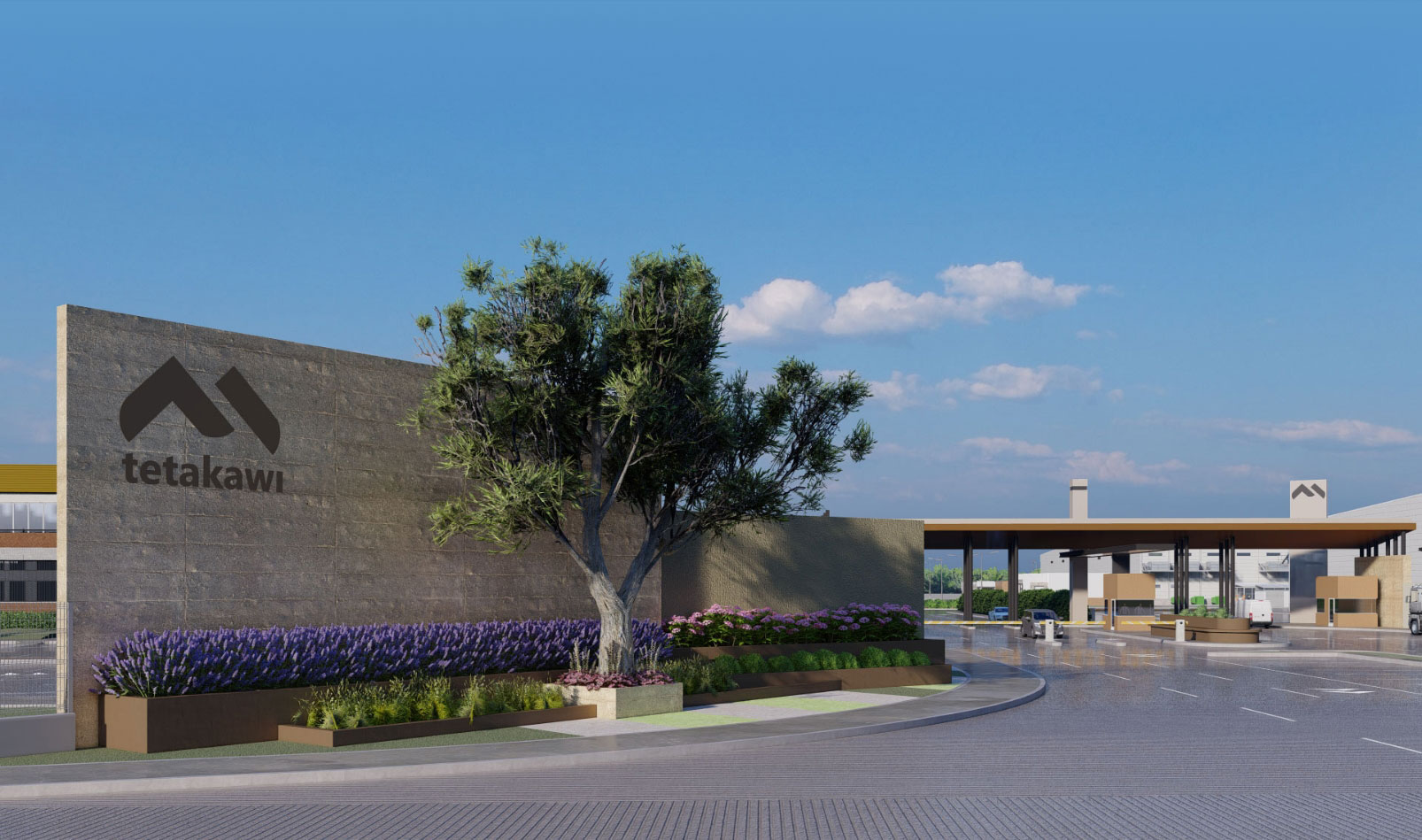
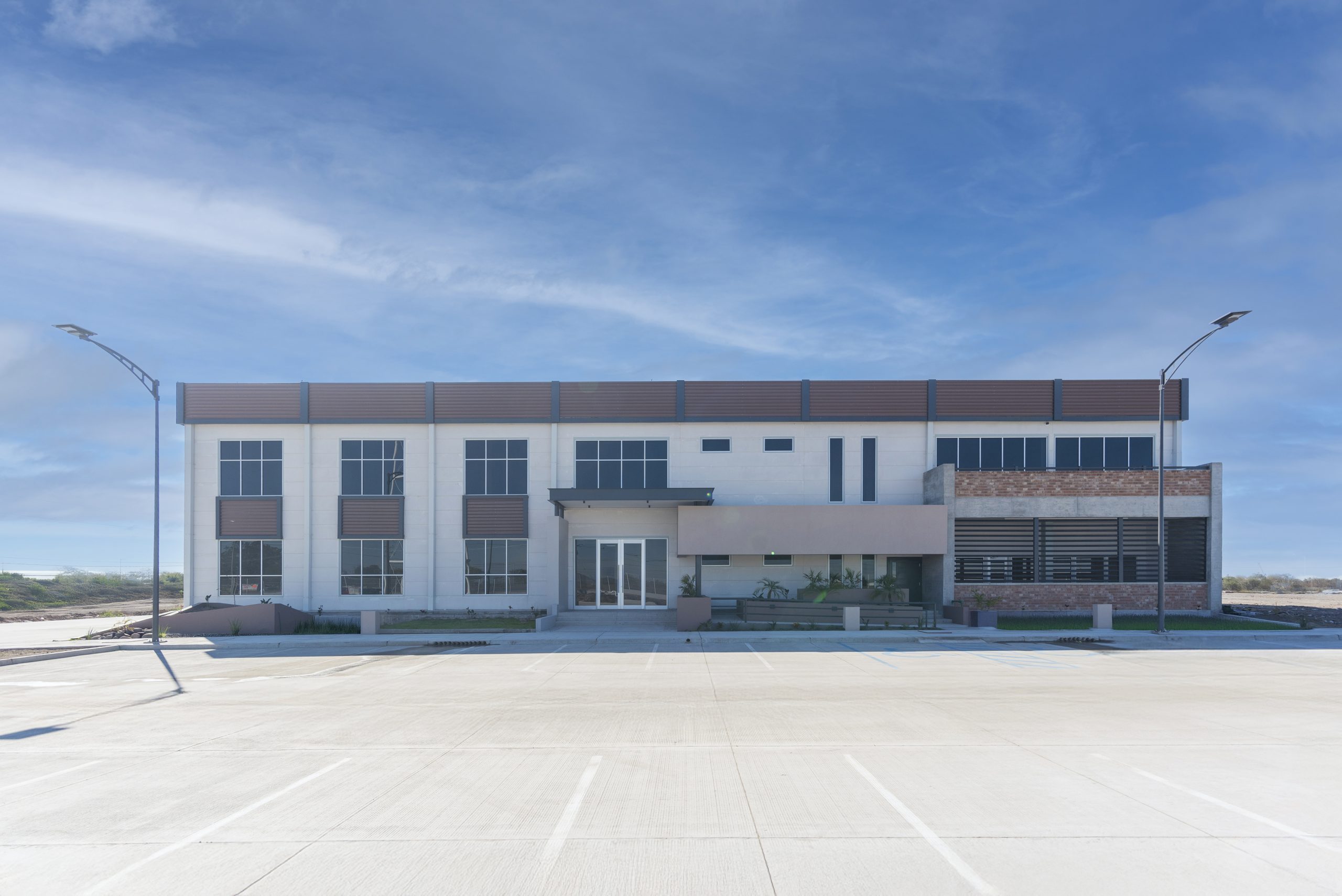
Mazatlán is where this primer stops being abstract. Inside the 100-acre campus, move-in-ready Class A industrial space is available now, which means the 30-day launch window is a scheduling fact rather than a development promise. The available building makes the point about specs versus starting condition: a 36,000-square-foot facility that arrives with climate control already installed across the production floor, offices, and lunch room (120 tons of HVAC on the production area alone, where most Mexican industrial buildings are ventilated rather than air-conditioned), a 500 KVA transformer with utility capacity already contracted with CFE, finished offices, fully built bathrooms, LED lighting at production intensities, and dedicated compressor and chemical-storage rooms. Most spec buildings hand that list to the tenant as a build-out project. Here it is the move-in condition, and the power question this article tells you to put in writing is already answered in writing. The surrounding infrastructure is the west-coast set: a deep-sea container port, an international airport, and highway and rail connections north to the border, with grid and water capacity that are not yet contested the way heavily built corridors are.
The workforce case is the deeper one. More than 500,000 people live within 30 miles of the park, with a median age of 31, over 29,000 students enrolled across 21 universities and technical schools, and 5,250 graduates a year, 35% of them technical. Workforce growth has run 6.1% over five years, and manufacturing draws on a labor pool that the tourism economy trained in showing up for demanding service work. Tetakawi’s campuses across Mexico support 60+ manufacturers employing 22,000+ people, and the retention evidence in Mazatlán is specific: Consolidated Precision Products, an aerospace castings manufacturer that has operated both independently in Baja California and inside Tetakawi’s Guaymas campus, has reported some of the strongest employee retention results in its global manufacturing network at its Mazatlán operation.
For teams looking for an industrial park with aerospace capabilities in Mexico, that CPP operation sits inside a broader west-coast aerospace context: certified capacity that can still stand up without inheriting a saturated hiring market, covered in depth in our analysis of where aerospace capacity can still stand up in Mexico.
How to Choose
Due diligence for industrial parks in Mexico reduces to six questions, and they work in order.
- Where is the market in its cycle? A park in a corridor with rising vacancy negotiates differently than one with a waiting list.
- What utilities are contracted to the site, in writing, with dates?
- What does the lease cost in year five, after escalations and net adders, in the currency your revenue arrives in?
- How deep is the workforce within commuting distance, and what does turnover run in that corridor?
- What is the expansion path inside the park if the operation succeeds?
- Do you want to own the entity, the payroll, and the compliance load, or contract them to a shelter and keep your team on production?
The first five questions are about the space. The sixth is about the operating model, and it changes the weight of the other five. Our site-selection framework extends this checklist to the full location decision.
See the Available Space
Class A space is move-in ready at the Mazatlán Manufacturing Campus. Walk the building, meet the team, and model your launch timeline.
Frequently Asked Questions
How much does industrial space cost in Mexico?
Asking rents ran roughly US $6–10 per square meter per month (about $0.56–$0.96 per square foot) across major markets in mid-2026 reports: $6.08 in Querétaro, $7.32 in Ciudad Juárez, $7.00–$7.15 in Monterrey, $8.68 in Tijuana, and $9.93–$10.38 in Mexico City. Triple-net adders for taxes, insurance, and maintenance come on top of base rent.
How do you lease industrial space in Mexico?
The typical path runs market selection, park shortlist, letter of intent, then lease negotiation covering escalations, net charges, contracted utilities, and expansion rights. Leases in institutional Class A parks are usually dollar-denominated and triple-net. In a shelter-serviced park, the lease arrives bundled with workforce and compliance services under one contract.
Do you need a Mexican legal entity to lease industrial space?
Not under a shelter structure. The shelter operator acts as employer, importer, and manufacturer of record, so a manufacturer can occupy Class A space and start production under a single U.S.-based contract, with no Mexican entity, in roughly 30 days on an operating campus. Reaching production as a standalone operation, with incorporation, permits, importer registration, and hiring, typically requires 8–12 months.
Is it faster to lease existing space or build to suit?
Leasing existing space is faster by a wide margin. Built-to-suit projects in Mexico commonly run 9–18 months from commitment to occupancy, while move-in-ready Class A space on an operating campus supports production in about 30 days. Build-to-suit wins when a process demands a configuration the market cannot supply.